Pitch Night vs Demo Day vs Pitch Competition
A pitch night, a demo day and a pitch competition all put you on a stage in front of investors. What they charge you to get there is completely different. Most demo days take a share of your company before you ever reach them, and the two biggest competition prizes we found are not gifts. Both $1 million prizes are paid as investments, for equity or a convertible note.

We wanted to know what each format really costs a founder, so we read the organizers' own pages. That meant the deal and demo day pages of 19 accelerators, the rules of 23 pitch competitions, and the pitch events listed on Luma and Eventbrite in 27 cities.
What we learned fits in three lines. A pitch night costs you one evening, and at ours a pitch ticket. A demo day costs you about three months in a program and usually a stake, a median of 8%. A competition costs you an application and months of rounds, for a prize that is often an investment.
For the evening itself, who sits in the audience and how to work the room, read what a pitch night is.
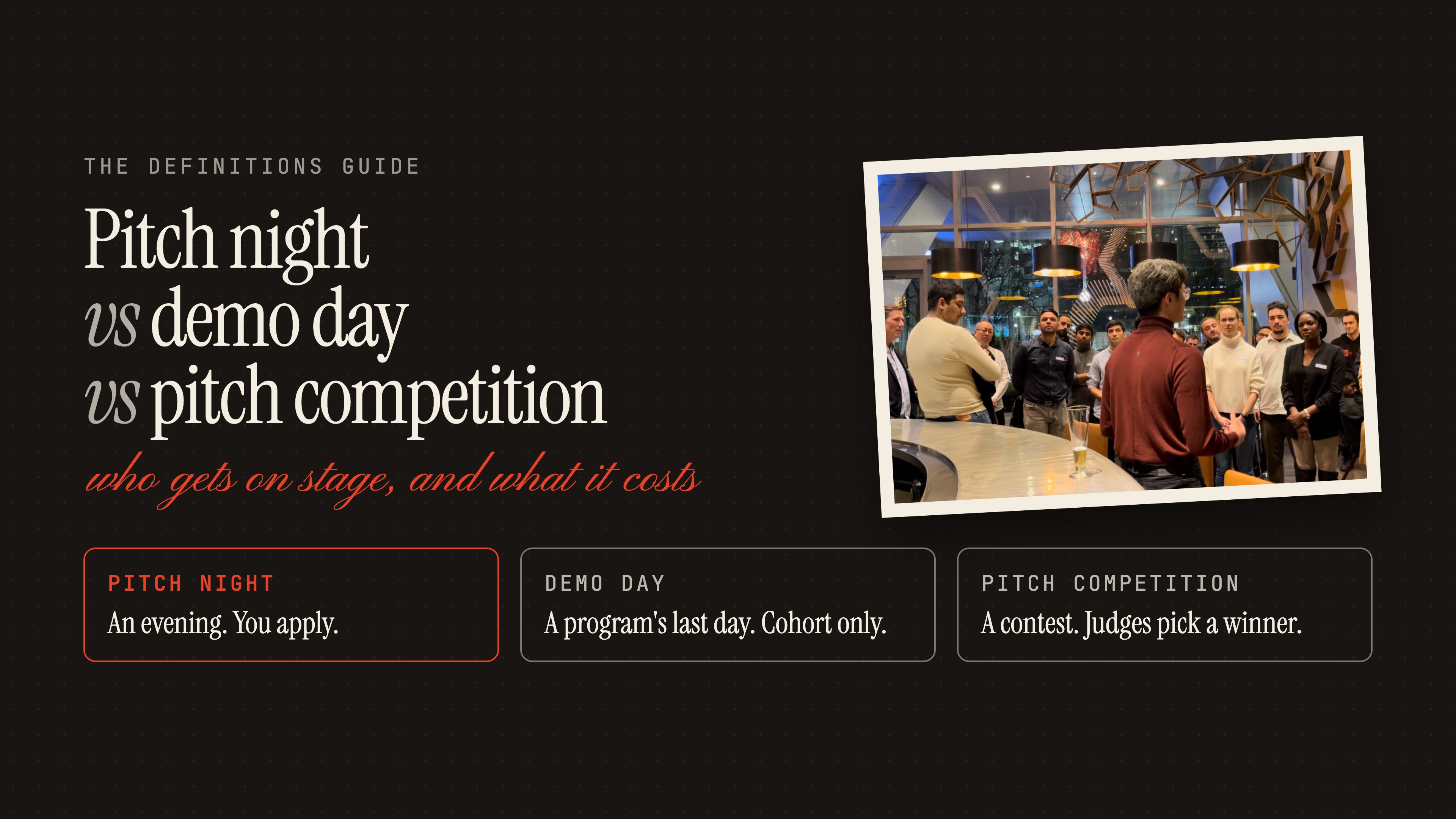
Pitch night vs demo day vs pitch competition, what is the difference?
Who is allowed on stage decides everything else. A pitch night takes founders who apply, a demo day only the program's own companies, and a competition the few who survive its rounds.
| Pitch night | Demo day | Pitch competition | |
|---|---|---|---|
| Who pitches | Founders who apply, a median of 6 a night | Only the accelerator's own cohort | Finalists who passed a screen and live cuts |
| Who listens | Investors, operators and founders | Mostly invited investors, about 100 to thousands | Judges, then often a conference audience |
| How you get in | An application or a pitch ticket | Get into the accelerator first | Apply by a deadline, months ahead |
| What it costs you | An evening and, at ours, a pitch ticket. No equity | About three months, and usually 5% to 12% of your company. A program fee at Antler, 1 of 19. The rest charge none or do not say | An application and months of rounds. About a third charge a fee |
| What you get | Questions, feedback, introductions | Investor meetings, with the program's money in | A prize or an investment, and a bigger stage |
"You cannot apply to a demo day. You apply to the program, and the stage comes with it."
In short, a pitch night asks for an evening, a demo day asks for equity and a program, and a competition asks for months, for a chance at a prize.
Pitch nights, the stage any founder can apply to
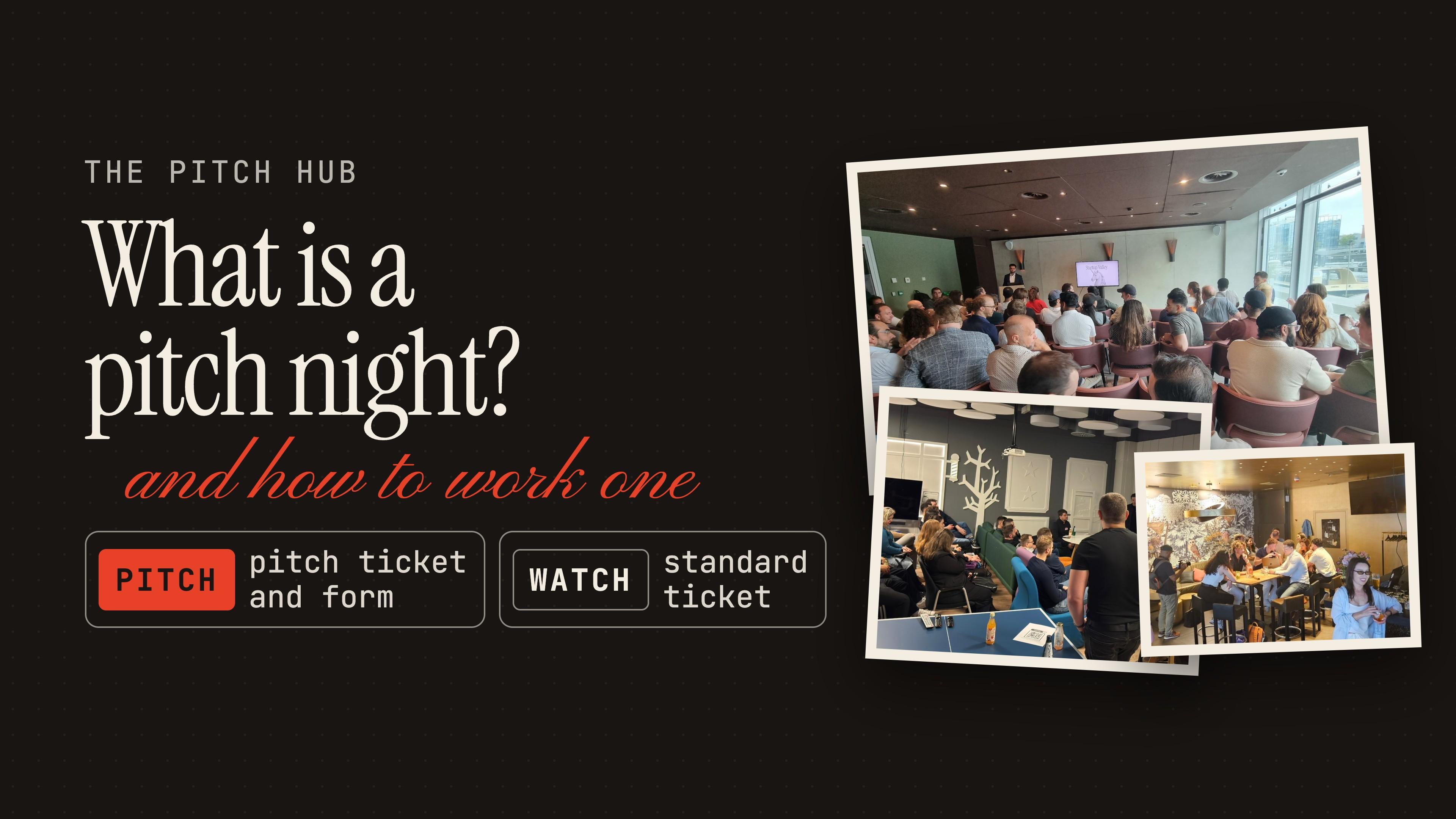
A pitch night is the one stage of the three you apply to directly, so it is the one you can reach in weeks. A few founders pitch to a mixed room of investors, operators and other founders, with questions after each pitch.
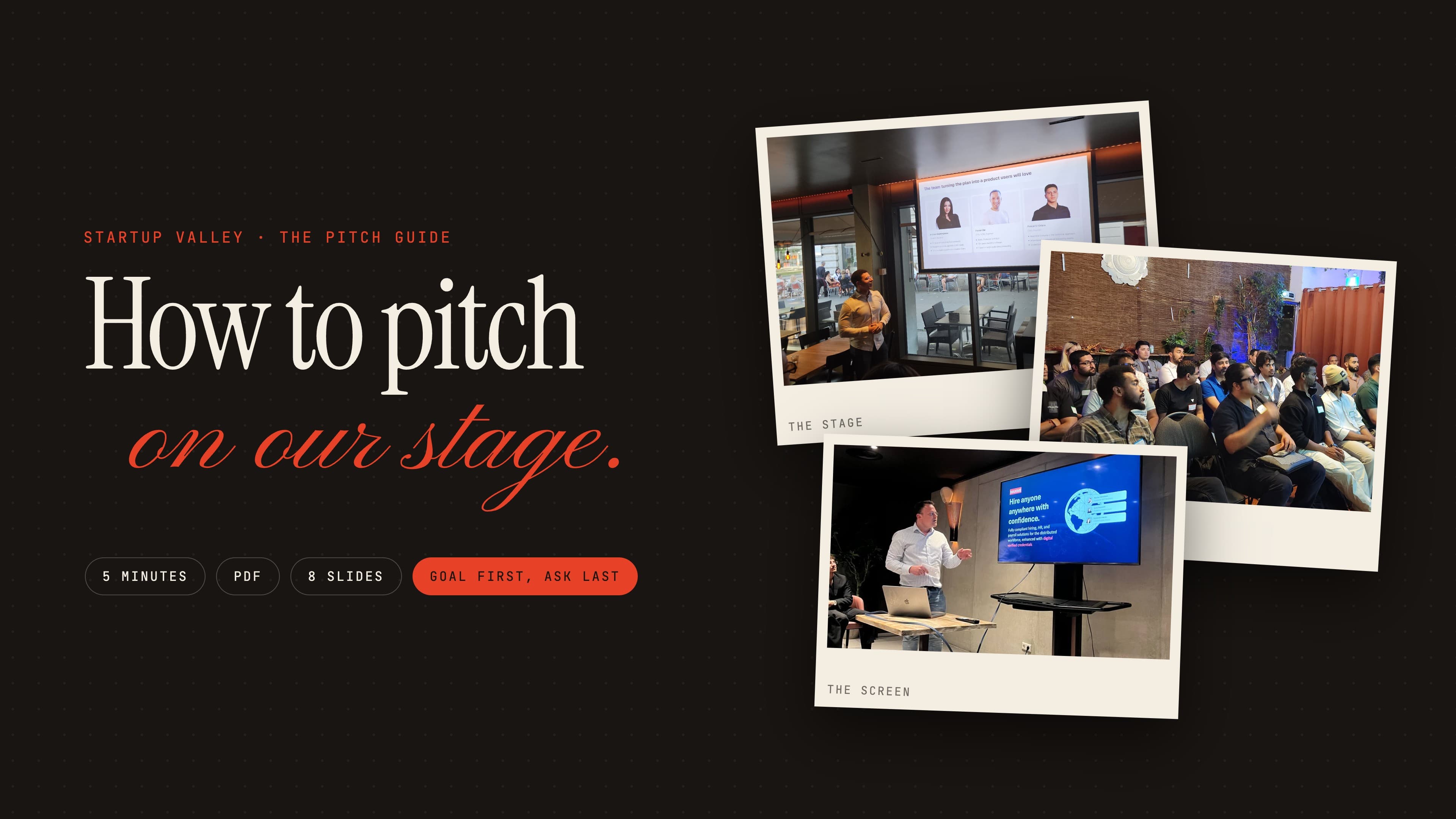
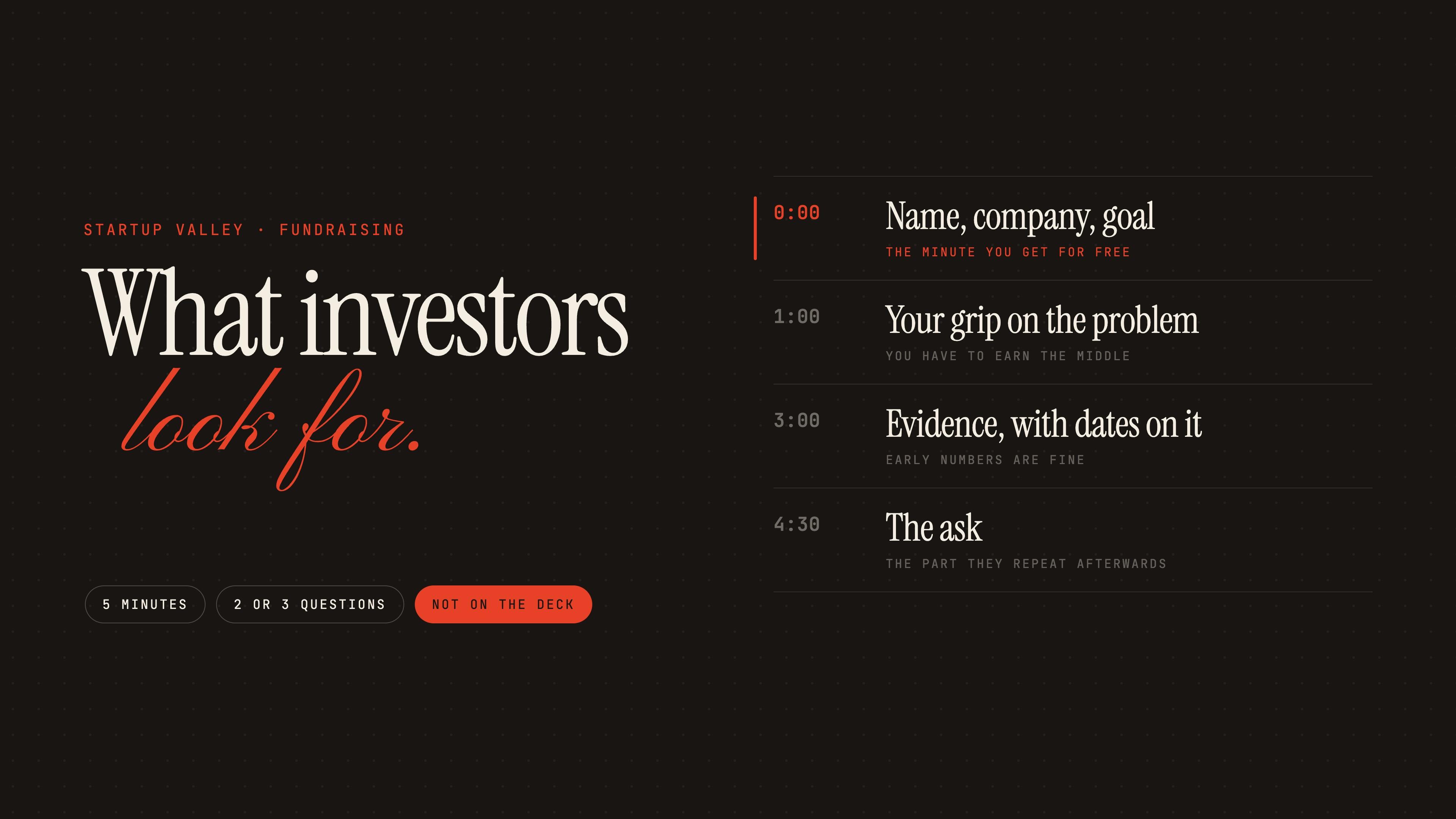
We know this format best. Startup Valley has run 1,050+ events in 25 cities since 2023. At ours each founder gets 5 minutes, then about 3 minutes of questions, in a pre-seed and seed room. The pitch ticket, priced on each event page, buys the 5 minutes, coaching on your deck before the night, a listing in our startup directory if you consent, and the chance to be featured in our investor digest. The pitch guide walks through the 5 minutes slide by slide.
Do not judge an evening by its title. About half of the pitch events we read name a winner, which makes them competitions in all but name. And a full calendar is often the same few organizers. In the 17 cities where we searched Eventbrite, 125 of the 161 pitch-titled listings that were not ours came from just 8 organizer accounts. So check who runs the event and how its stage works. For evenings with no stage at all, see where to find venture networking events.
Demo days, the stage at the end of a program
A demo day is the last day of an accelerator, and you pay for the stage in equity. An accelerator is a fixed-length program, usually three months, that invests in a group of startups, the cohort, in exchange for equity. On demo day the cohort pitches to investors the program invited. You cannot apply to a demo day. You apply to the program, and the stage comes with it.
Of the 19 accelerators we read, 12 end a cohort with a demo day or an investor showcase, and in every one whose rules we could read, only the program's own companies pitch. The other seven, among them Antler, Seedcamp and Hub71, use an investment committee, a fund or roadshows instead.
Who watches, and how to watch from outside
The audience is large and almost always invited. YC (Y Combinator) fills its room with about 1,500 investors and media, invited by "recent investment history in YC companies". a16z speedrun, Andreessen Horowitz's accelerator, says "thousands of investors", in person and online. Of the demo days we could read, only Startmate in Australia sells public tickets, A$25 to A$35 (about $17 to $23) for its Winter '26 demo day.
You can still learn from one you are not in. Startmate posts the full night on YouTube and Entrepreneurs First shows recent pitches on its homepage. Watching 15 or 20 funded pitches back to back is free study. YC holds a demo day every quarter and most others twice a year, and Techstars New York, Boston and London share one, so choosing between them is choosing a city, not a season.
What you give to get on that stage
A median of 8% of your company, from 5% to 12% across 11 published deals. And the headline can understate it. YC, Techstars and Entrepreneurs First add an uncapped MFN SAFE on top of the fixed stake, and Hub71 pays its whole cash piece that way. That SAFE turns into shares at your next round, so what they end up owning can be more than the number on the page. MIT delta v and the Google for Startups Accelerator take no equity at all.
Antler is the one program that also charges founders to join, and its stake runs from 8.5% to 12% by country. The fee is £40,000 (about $52,600) in the UK, and A$75,000 (about $50,300) in Australia under its April 2025 terms.
| Program | Money in | Stake |
|---|---|---|
| Techstars, New York page | $220,000 | 5% common stock, plus an uncapped MFN SAFE |
| Y Combinator | $500,000 | 7% for $125,000, plus $375,000 on an uncapped MFN SAFE |
| Entrepreneurs First | $125,000, plus an optional $125,000 | 8%, plus an uncapped MFN on the second part |
| Startmate | A$120,000 (about $80,500) | 8% |
| Antler UK | £125,000 (about $164,000) plus an £85,000 note | 8.5%, and the £40,000 fee |
| a16z speedrun | $500,000, plus up to $500,000 in the next round | 10% |
Pitch competitions, a ranked contest for a prize
A pitch competition is a contest where judges rank the pitches and the winner takes money, but that money is often an investment. Most have one public deadline, a paper screen and about three live cuts. TechCrunch's Startup Battlefield went from 200 companies to 20, then 5, then 1 in 2026.
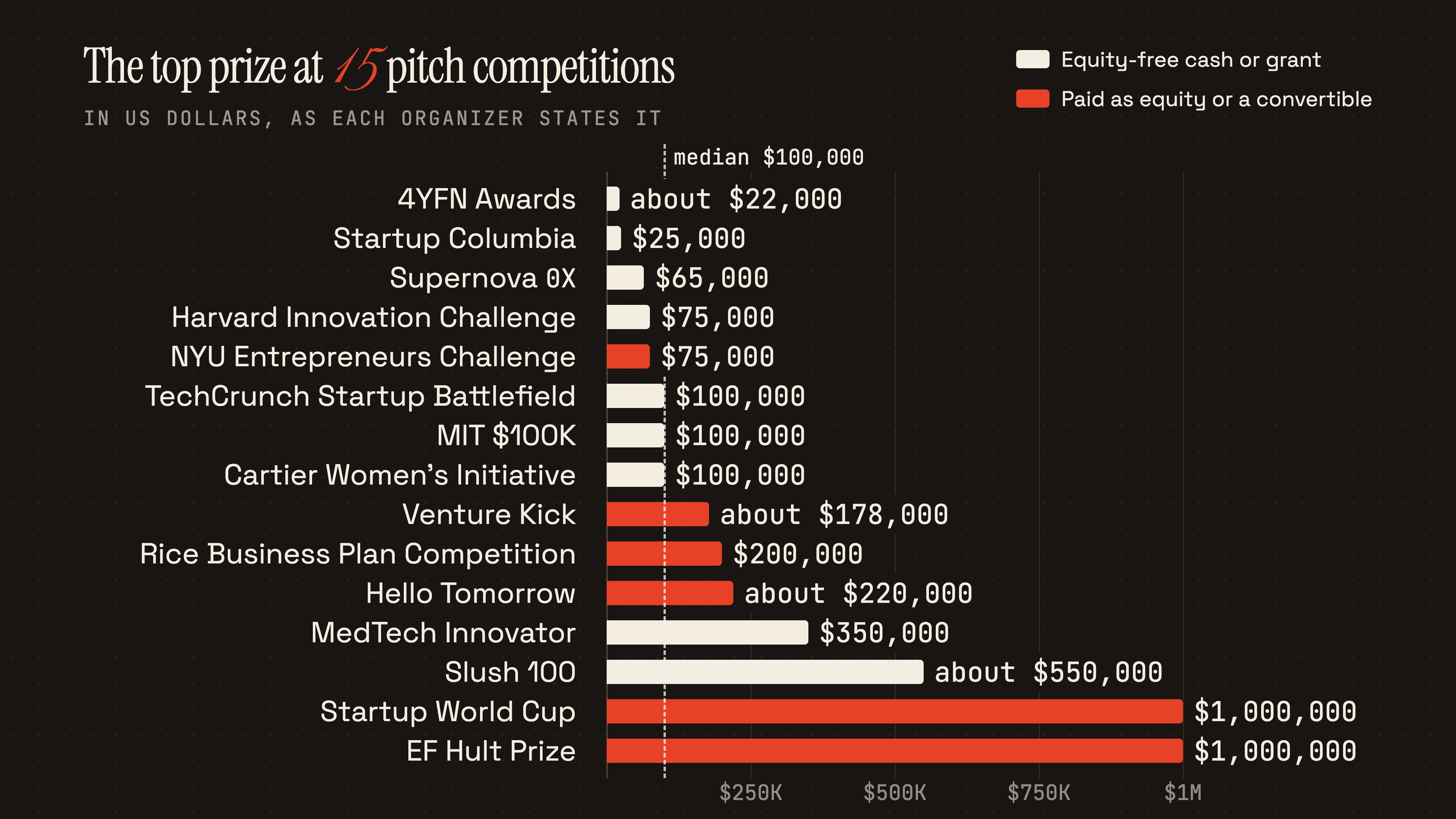
We read 23 active competitions on their own pages. The 15 that name a single top prize have a median of about $100,000. For New York, our list of NYC pitch competitions has every window with its closing date.
What the prize really is
The two biggest prizes are investments, not gifts. The EF Hult Prize Foundation takes "typically 10%" of its $1 million winner, and Startup World Cup pays its $1 million "in exchange for a portion of equity" or as a convertible note. The largest equity-free prize we found is Slush 100's €500,000 (about $550,000) in Helsinki.
The small print matters. At Venture Kick in Switzerland only the first CHF 10,000 (about $11,900) is a grant, and the next CHF 140,000 (about $166,000) come as convertible loans. And three of the most visible stages, Web Summit PITCH, SXSW Pitch and the 2026 Extreme Tech Challenge, name no cash prize at all. The prize is the stage.
What it costs to enter, and your odds
About a third charge you something, 8 of the 23. It runs from a $225 application fee at SXSW Pitch, kept even if you are not selected, to $15,000 to join MedTech Innovator. Web Summit PITCH and Supernova 0X in Dubai first ask you to buy an exhibitor package at the conference. Travel is on you at every one that mentions it.
At the big open competitions the odds are long. At Slush 100 in 2026, 1,400+ teams applied and about 1 in 1,400 won. At a small university one a finalist has a real shot. Harvard's President's Innovation Challenge picked 10 winners from 25 finalists in 2026.
And expect months. Across the 10 competitions that publish both dates, a median of 3.8 months passes between the deadline and the final.
Before you apply
Read the funding rules before you take money from anyone. MIT's $100K disqualifies teams over its funding cap, and "a deal does not have to be legally closed" to count, so a verbal commitment can be enough.
Check the competition still runs. Some names on "best competitions" lists are dead. Get in the Ring's last listed round was in April 2024, and the old Pitch@Palace domain served a casino site on November 20, 2026.
Seven competitions with a dated deadline were taking applications on November 20, 2026, plus Venture Kick, which takes them year-round. Two of the seven are only for one university's own students.
| Closes | Competition | Final or decision | Who can enter |
|---|---|---|---|
| November 22, 2026 | eMerge Americas Showcase | Miami, March 2 to 4, 2027 | Pre-seed to Series A, with a working product |
| November 23, 2026 | Supernova 0X | Dubai, December 10, 2026 | Exhibitors at Expand North Star |
| November 30, 2026 | Hello Tomorrow Global Challenge | Amsterdam, June 2 and 3, 2027 | Deep tech teams of two or more, free |
| December 1, 2026 | MedTech Innovator | Notified late May 2027 | Medtech companies |
| December 8, 2026 | Harvard President's Innovation Challenge | Not announced | Harvard students only |
| January 17, 2027 | UC LAUNCH demo day | End of April 2027 | UC students, faculty or alumni |
| January 29, 2027 | Rice Business Plan Competition | Houston, April 8 to 10, 2027 | Teams with two or more student founders |
The formats people confuse with them
Some events look like a pitch night from outside and ask something else of you. Each one below has a single fact that surprises most founders.
Startup Weekend is a 54-hour build. Anyone pitches an idea in 60 seconds on Friday, teams form around the ideas the room votes for, and judges see the result on Sunday. Techstars' own rules say every edition must charge admission, and "No cash prizes may be given at a Startup Weekend." It is growing. As of November 20, 2026, Techstars' index lists 164 editions in 2026, up from 129 in 2024, and 51 of the 2026 ones were in Brazil against 19 in the United States. New York has none in the index, which starts in November 2023, and San Francisco and Los Angeles have had none since June 2024.
A hackathon judges a working build, not a pitch. MLH, the main student hackathon league, bans entry fees at member events, and Devpost, the main hackathon platform, says its prizes are "awarded without taking developer IP", so you keep what you build.
An angel group is a club of individual investors that screens companies in stages and shows only a few to the full membership. The groups that publish both ends fund between under 1% and about 4% of applicants, and Keiretsu Forum's typical presenters are already in their A or B rounds. If you are earlier, a pitch night or a competition is the better first stage. Some groups charge to present. The Angel Capital Association, the US association of angel groups, recommends on its FAQ no more than "a few hundred dollars" to apply and $500 to present. And angel office hours are often the first screening step, not free advice. For the first email to a group, see the cold intro that works.
An investor showcase is invite-only, and a "reverse pitch" means two things. At one kind VCs pitch their thesis and check size to founders. At the other a corporate brings a real problem with money attached, and founders compete to solve it.
Which one fits your startup?
Pick by what you can give, money, equity or months, and by what you need next.
| If you are | Go to | Because |
|---|---|---|
| An idea, no team yet | Startup Weekend or a hackathon | You leave with a team and a first build |
| A student founder | A university or student competition | Prize money, often equity-free. NYU's and Rice's top prizes are investments |
| Pre-seed or seed, raising or testing the story | A pitch night | On stage within weeks, in front of investors and operators |
| Ready to give equity for money and structure | An accelerator, which ends in its demo day | The demo day stage comes with the program |
| Showing traction, with months to spare | A competition that pays equity-free | Prize money that does not dilute you, if you win |
| With revenue, raising a defined round | An angel group | A formal diligence path and members who invest together |
What each path costs in time
Count the gates, the steps where someone can say no. A pitch night has one, an application or a pitch ticket, and you can be on stage within weeks. A demo day also has one, getting into the accelerator, then about three months inside it. A competition has four and an angel group two, and both take months.
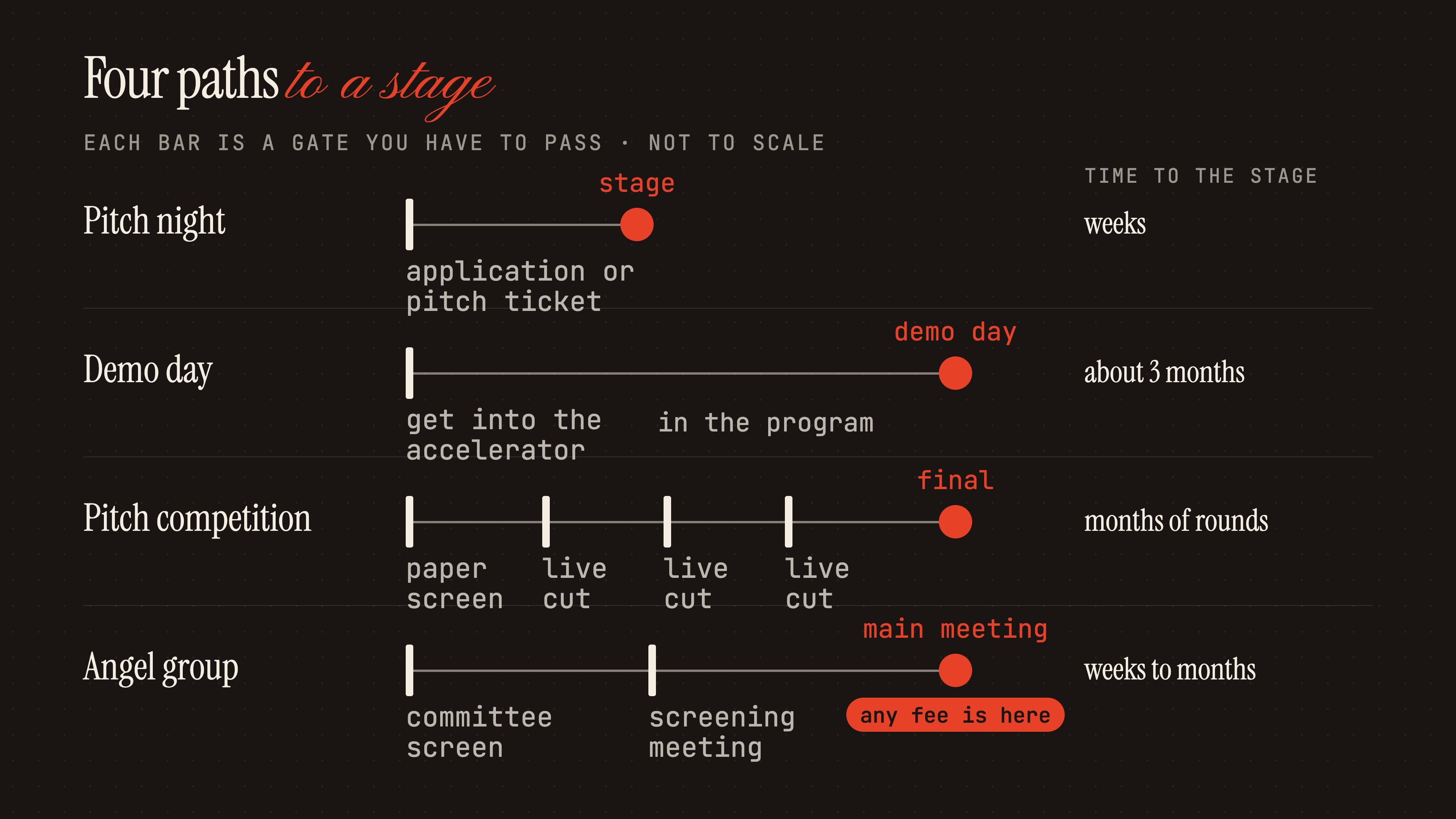
The formats stack, so order them. A pitch night is the cheapest place to test the story you will later send to an accelerator or a competition, and what investors look for in a five-minute pitch holds on every one of these stages. Many Startup Battlefield 200 companies "applied more than once" before TechCrunch selected them, so a first rejection is common.
Pitch night vs demo day FAQ
Is a demo day the same as a pitch night?
No. Every demo day whose rules we could read puts only the accelerator's own cohort on stage. A pitch night is an evening any founder can apply to.
Do pitch competitions take equity?
Some do. 6 of the 15 that name a top prize pay it as an investment, including both $1 million prizes. Slush 100's €500,000 is the largest equity-free prize we found.
Is Startup Weekend a pitch competition?
No. It is a 54-hour build that starts with 60-second idea pitches, and Techstars bans cash prizes at every edition.
Can I pitch at a Startup Valley event?
Yes, in 25 cities. Five minutes on stage, about three minutes of questions from investors in the room, and networking before and after. Apply to pitch, or pick a city on our events calendar.
What does it cost to pitch at a Startup Valley event?
A pitch ticket, priced on each event page, with coaching on your deck included. We take no equity and no fee afterwards.
The official pages
The program, prize, fee and date facts above were read on these pages on November 20, 2026. Deals and deadlines change, so check before you apply.
Five minutes on stage, questions from investors in the room, and networking before and after. Pre-seed and seed founders, in 25 cities.