How to actually work a pitch night
A founder's field guide to getting more out of the room than a free drink: before, during, and long after the doors close.


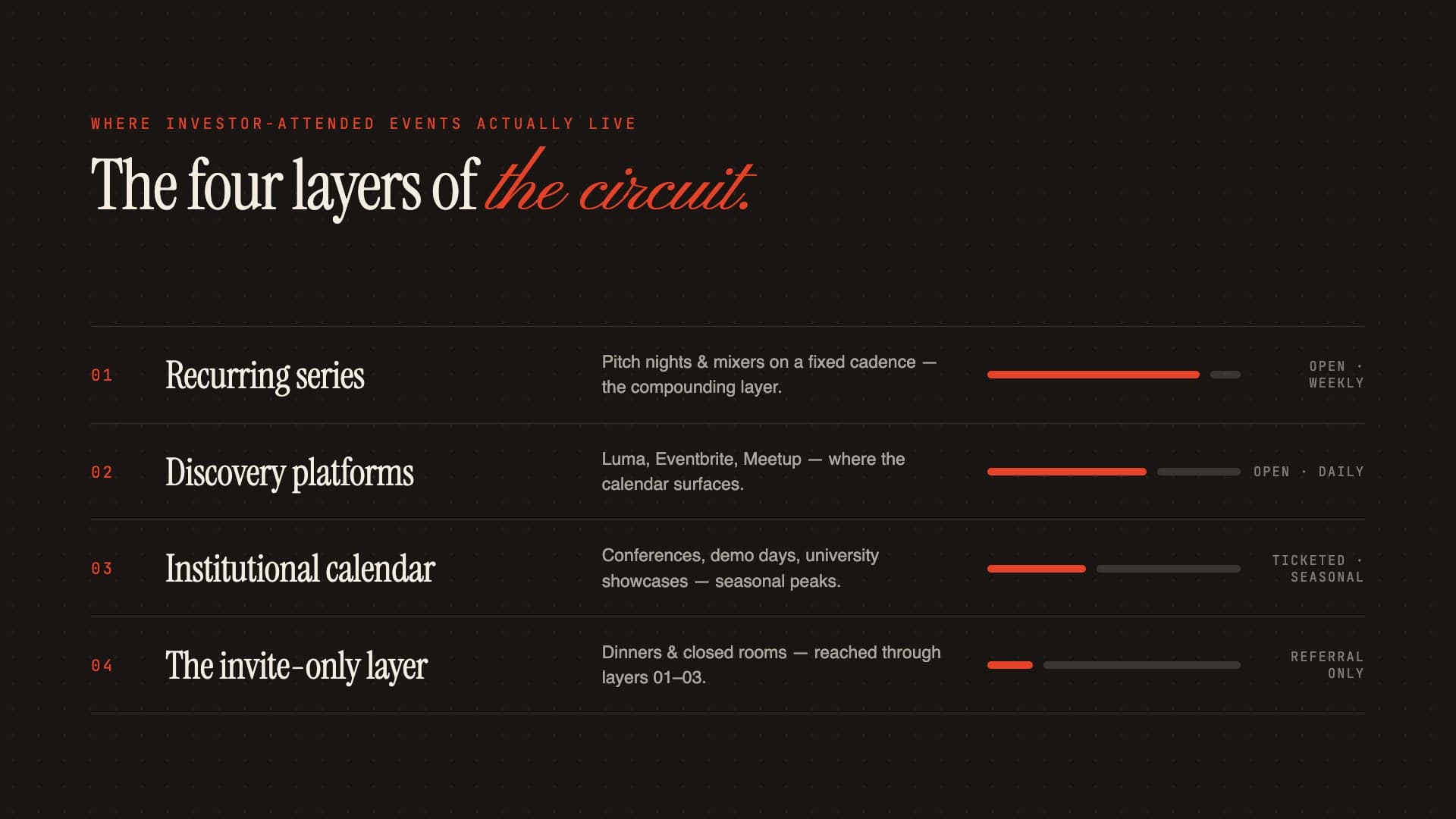
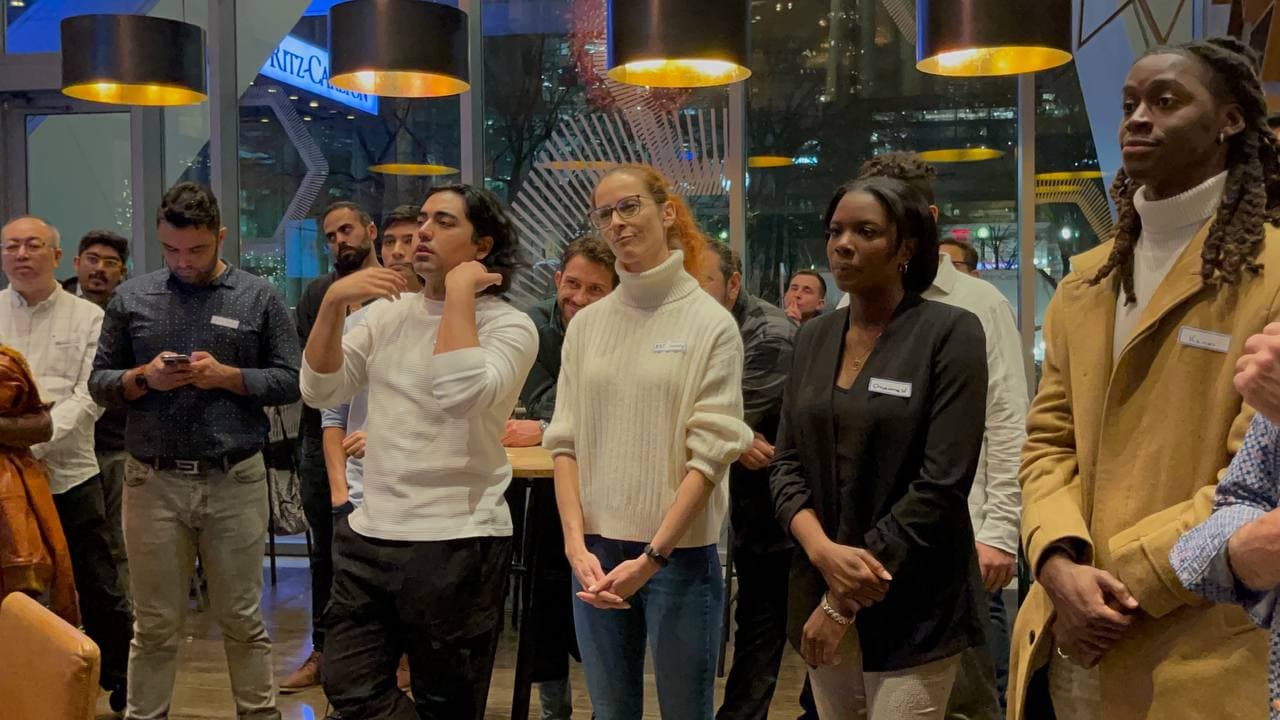
A pitch night is an evening event where a handful of early-stage founders each present their company to a room of investors, operators and other founders, usually in five minutes or less, with open time to talk before and after. The pitches set the schedule; the room around them is where most of the work actually happens. How a Startup Valley night runs is worth a read before your first one.
Most founders treat a pitch night like a lottery ticket: show up, pitch, hope someone with a checkbook is listening. The ones who get the most out of it treat it like a campaign, with a before, a during, and an after. Here's the version we wish every founder ran.
Before: do the unglamorous homework
The guest list is usually published, or at least the hosts will tell you who's coming if you ask. Spend twenty minutes on it. Pick three to five people you genuinely want to meet and have a specific, non-generic reason for each. "I read your thread on usage-based pricing and we just shipped it" beats "I'd love to pick your brain" every single time.
Then prepare the thing nobody prepares: your one sentence. Not your elevator pitch. Your one sentence. The version you can say while someone is still half-listening and holding a drink. If it doesn't fit on a business card, it's not ready.
"The room rewards specificity. Vague founders are forgettable; specific ones get introduced."
During: work the room like a host, not a guest
The best networkers act like they're throwing the party. They introduce people to each other. They refill the awkward person standing alone. Generosity is disarming, and it's remembered. The investor you connected to a portfolio founder will take your call next week.
When you do pitch, watch the room, not your slides. Five minutes is enough to be memorable for one idea, not ten. Pick the single most surprising, true thing about what you're building and lead with it. We wrote up the other side of that in what investors look for in a five-minute pitch.
After: the follow-up is the whole game
Ninety percent of the value of any event is created in the forty-eight hours after it ends, and ninety percent of founders skip it. Send the short, specific note while you're still fresh in their memory. Reference the actual conversation. Attach nothing. Ask for one small, clear next step. The shape of that note is close to a good cold email, which we broke down in the cold intro that actually gets a reply.
And get yourself listed. Every company that pitches at a Startup Valley night lands in our public directory, and the best of each fortnight gets featured in the biweekly investor drop. That's the compounding part: the night itself ends, but the listing works for months. If you have not stood up at one yet, you can apply for a pitch slot at an upcoming night.
Find a pitch night near you and put this into practice.