The cold intro that actually gets a reply
Investors don't hate cold email. They hate lazy email. The difference between a reply and the archive button fits in your first two lines.

Let's clear up the myth first: cold intros work. Investors fund companies they first met in their inbox more often than the warm-intro industrial complex would have you believe. What doesn't work is what most founders actually send: a message that could have gone to any of two hundred investors, and visibly did. The decision to archive happens in about two seconds, and it's almost never about your company. It's about your email.
We've hosted 850+ nights since 2023, and the investors in our rooms tell versions of the same story: the inbox is a wall of sameness, and the rare email that breaks through does a small number of things right. Here's the anatomy, and the autopsy of the ones that die.
The seven emails that get archived in two seconds
You've seen these. You may have sent one. The mail-merge blast where only the name field changed. The four-paragraph life story that buries the company in paragraph three. The "quick question" that isn't quick and isn't a question. The vague flatterer: "big fan of your work" with no evidence of having read any of it. The deck-first email with no text worth reading, just an attachment and hope. The mystery pitch that's so protective of the idea it never says what the company does. And the premature ask: thirty minutes of a stranger's calendar, requested before earning thirty seconds of their attention.
Notice what they share: every one of them transfers work from the sender to the reader. Figure out what we do. Figure out why this is relevant to you. Read this deck to find the point. Investors triage hundreds of these. Anything that smells like homework gets archived on reflex, not judgment. Your email never even got rejected. It just never got read.
"A cold intro isn't a pitch. It's proof you did your homework, compressed into five sentences."
The anatomy of the one that gets answered
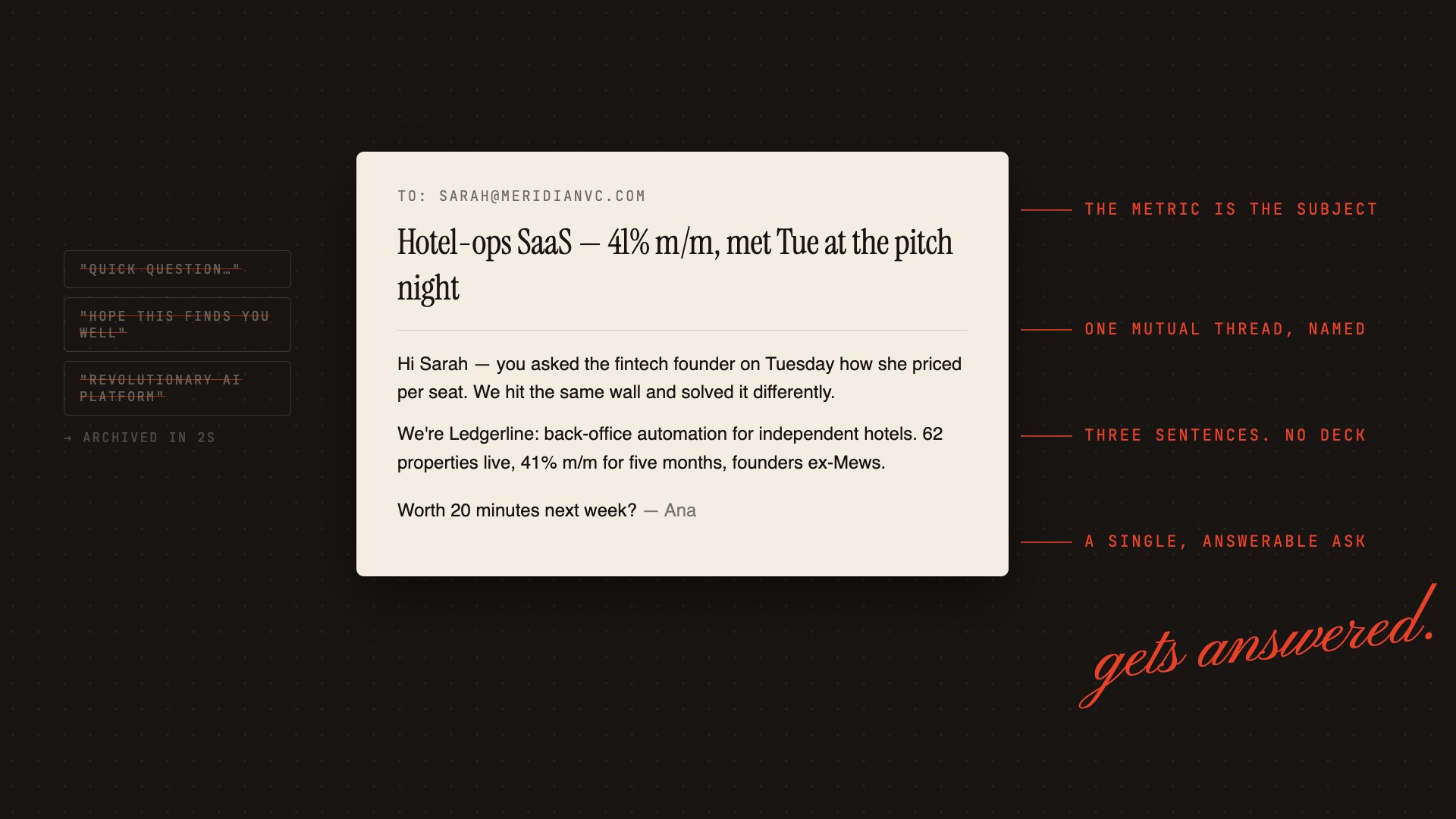
The email that works is five or six sentences, and every sentence has a job. The first line proves this isn't a blast: a specific, checkable reason you're writing to this investor: a company they backed, a thing they wrote, a talk they gave, and how it connects to you. This line is the whole game. It can't be faked with flattery, because its job is to demonstrate work, not admiration.
The second line is your company in one sentence: plain words a smart outsider understands on first read, no category jargon doing the heavy lifting. The third is your proof: the most concrete, honest signal you have. Real traction if you have it; if you don't, say what's true: a working product, a pilot, a waitlist with actual names on it. Investors can smell a dressed-up number from across the room, and the honesty itself reads as competence.
Then the ask, and it should be small. Not "can I get 30 minutes". Try "worth a look?" with a link, or one specific question they're unusually qualified to answer. Small asks get answered because they can be answered from a phone in a queue. Big asks get deferred, and deferred means forgotten. Close with your name and one link. No attachments, no calendar links, no "I know you're busy." They know they're busy.
Make it warm without waiting for permission
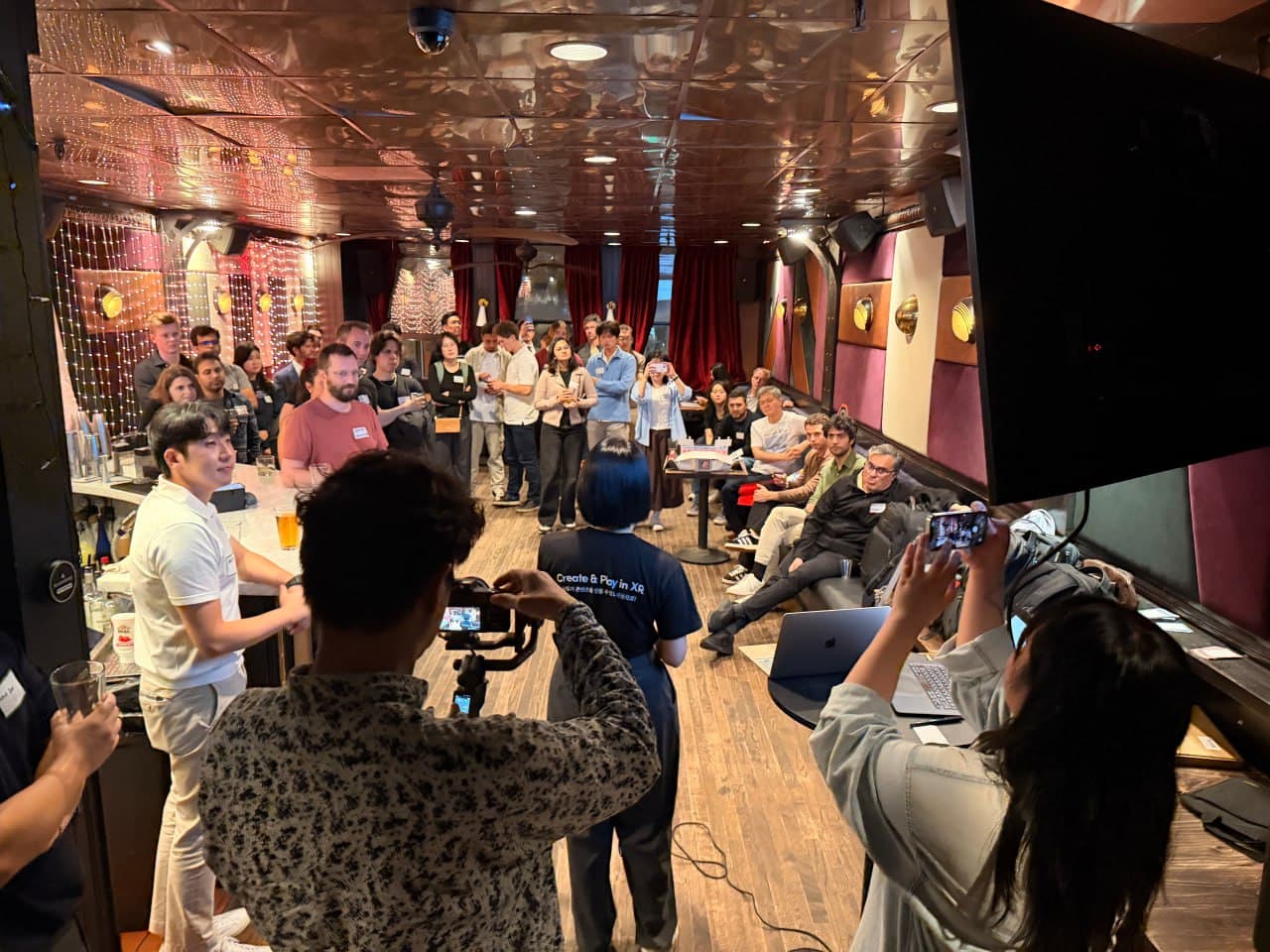
The best cold intro is the one that isn't quite cold. Every investor you might email exists somewhere in the physical world (on panels, at demo days, in the crowd at pitch nights), and one real-life encounter converts a cold email into a lukewarm one, which is a different species entirely. "We spoke briefly after the pitches on Tuesday" earns you a first-line specificity that no amount of desk research can match.
This is, frankly, half of why our rooms exist. Investors come to Startup Valley nights in over 25 cities precisely because they'd rather meet founders as people than as subject lines. You don't need to pitch anyone at the bar. You need ninety seconds of genuine conversation and a name remembered. The email you send Thursday morning does the rest.
Timing is part of the craft too. Send it while the encounter is still fresh: within two days, before you've faded back into the inbox wall. And if you truly never met them, borrow proximity honestly: a portfolio founder you know, a mutual connection you've actually worked with, a public comment of theirs you can respond to substantively. What you're building, in every case, is the same thing: one verifiable thread between your name and their world. That thread is what the first line of your email hangs on.
Send fewer, better
The math most founders run is backwards. Two hundred templated emails at a fraction-of-a-percent reply rate isn't outreach, it's spam with a dream attached. Twenty researched emails to twenty investors who have an actual, articulable reason to care will outperform it every time, and it won't burn your name in a community that talks to each other constantly.
And build the surfaces that let investors find you between sends. Companies that pitch at our nights land in the public directory, where investors browse on their own schedule, and the strongest of each fortnight go out in the biweekly drop: 5 to 7 companies, every other Tuesday, straight to inboxes that asked for them. A cold intro is one arrow. Being findable is the quiver. Do the homework, keep it short, and ask for something small. That's the whole trick, which is exactly why so few people do it.
Find a pitch night near you and put this into practice.