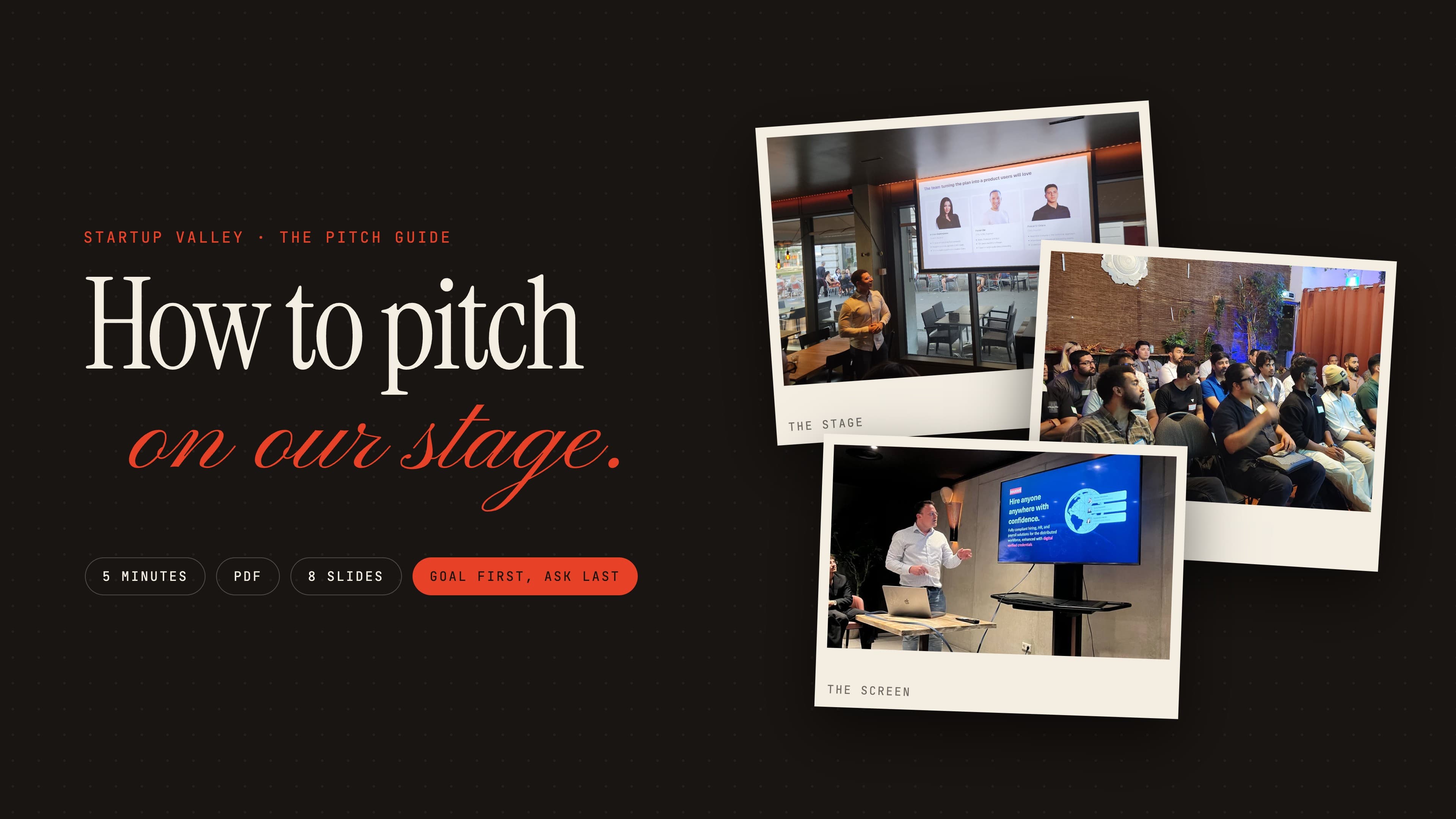
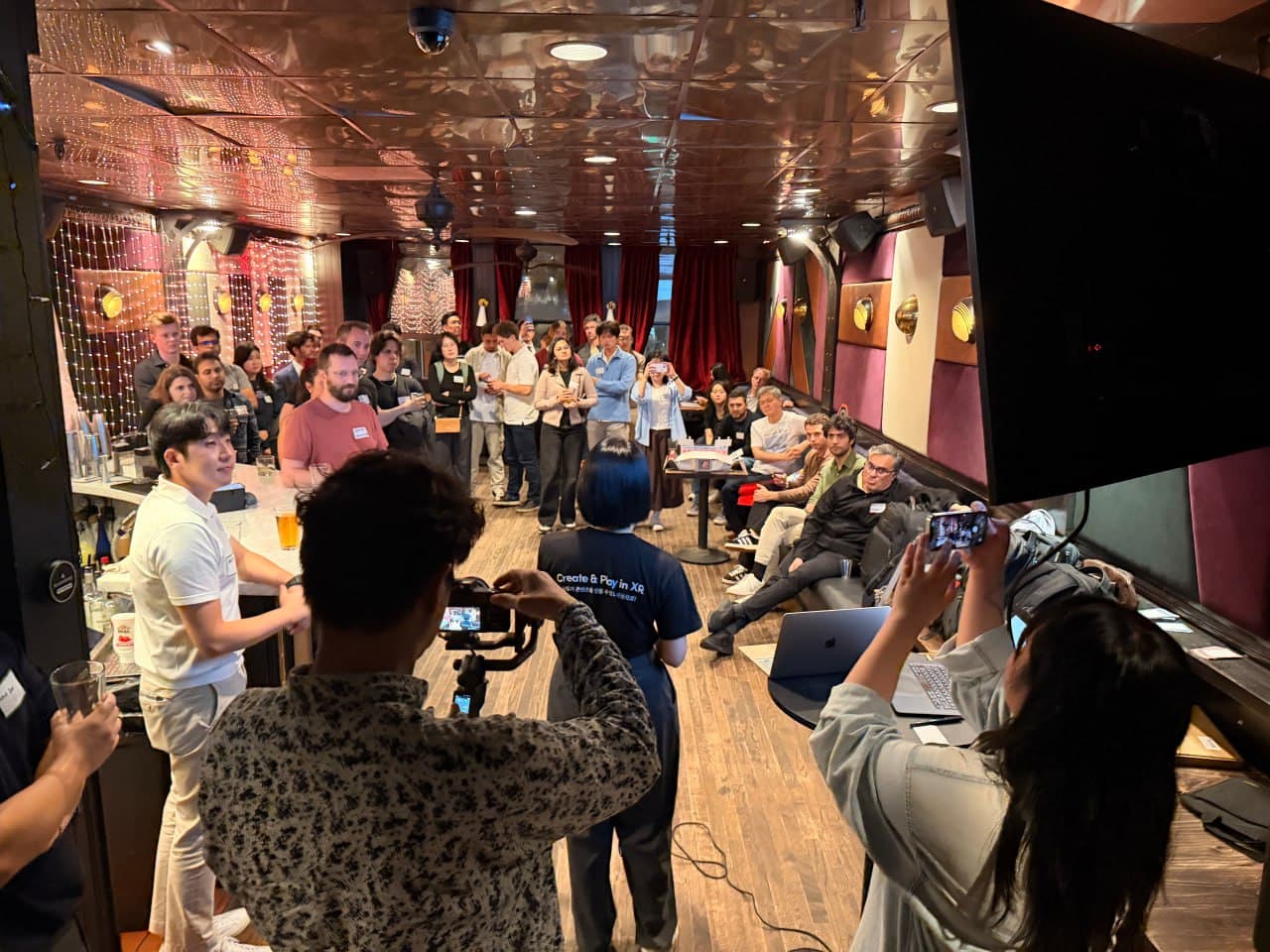
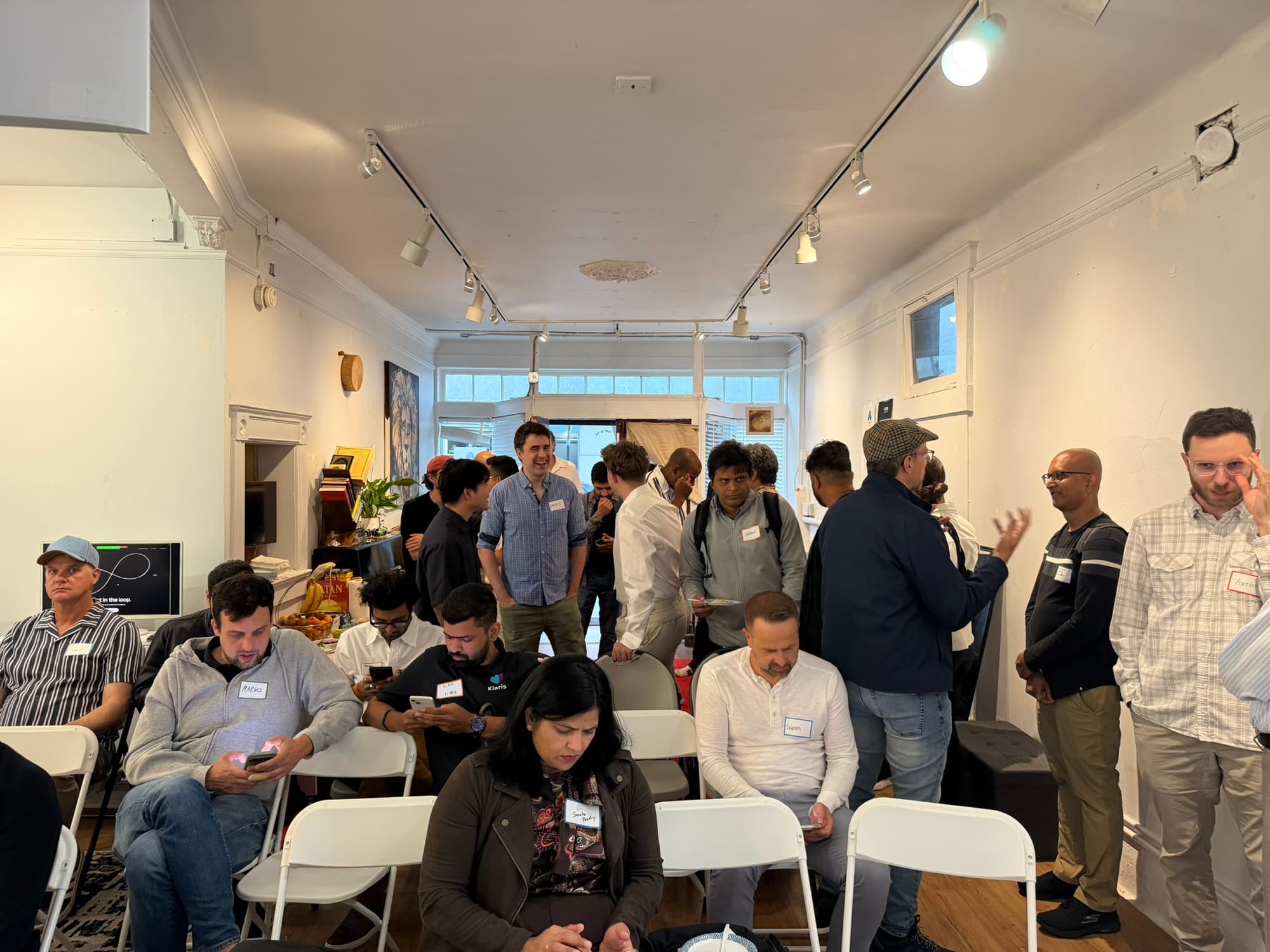
We ran 850 events. Here's what makes a room click.
Same format, same city, same drinks, and yet one night crackles while another lies flat. After 850+ events, we've stopped believing in luck. The rooms that click share three things, and none of them are on the agenda.

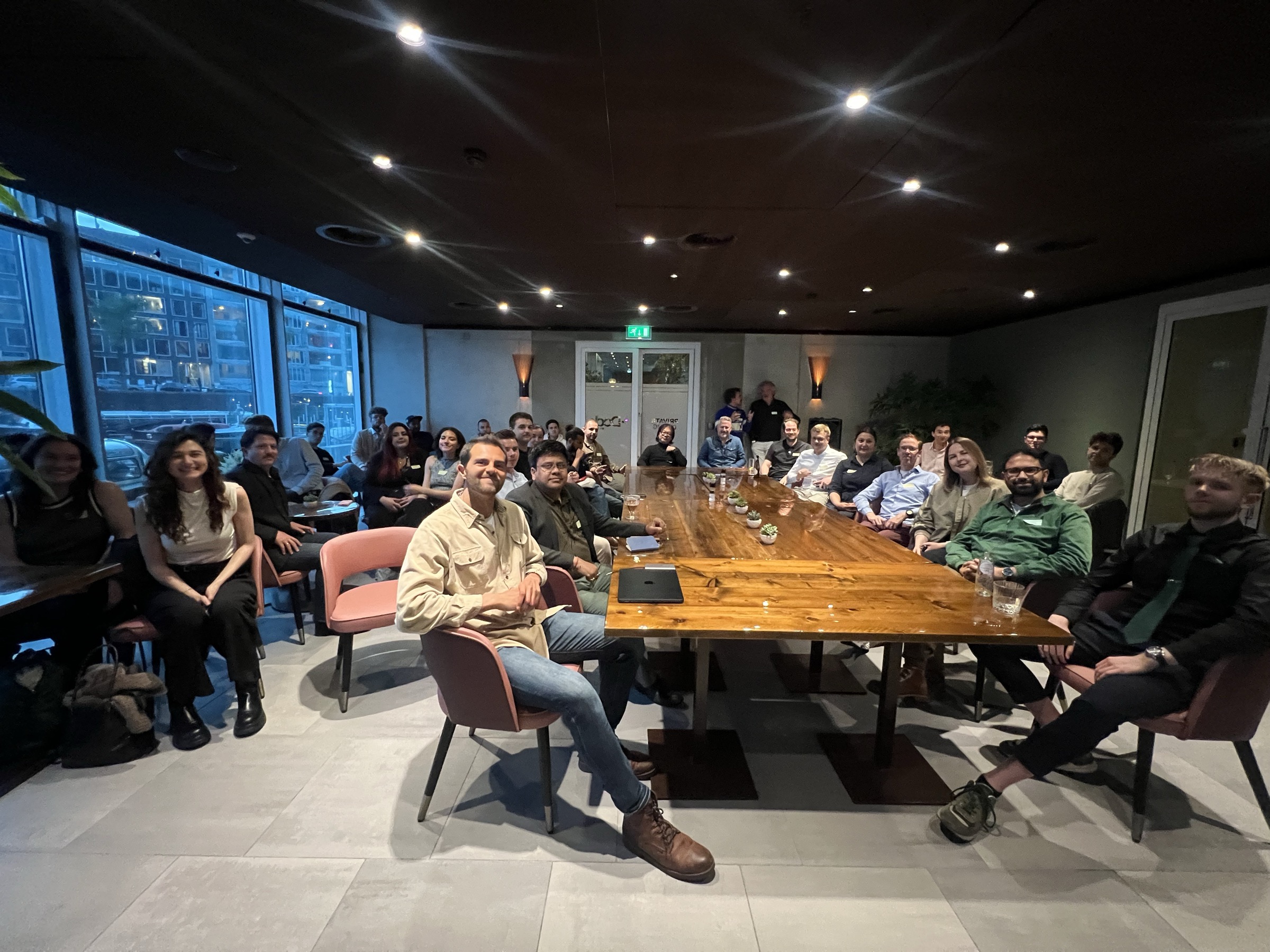
There's a moment, about forty minutes into a good night, when the room stops needing us. The pitches are done, nobody's checking the schedule, and the sound changes: that rolling, overlapping hum of thirty conversations that don't want to end. Every host knows the sound. We've spent three years and 850+ events trying to manufacture it on demand.
Here's the humbling part: it has almost nothing to do with the agenda. We've run nights with flawless run-of-show that never got there, and nights where the projector died that people still bring up a year later. The agenda is the skeleton; the click is chemistry. But chemistry, it turns out, has inputs you can control.
After enough nights across 25 cities, the pattern is clear to us. The rooms that click get three things right: the mix, the shape, and the hosting. Miss any one and you can feel it by the second drink.
The mix matters more than the headcount
The first question everyone asks about an event is "how many people came?" It's the wrong question. A hundred people of the same kind is a conference queue; forty of the right blend is electric. The blend that works, night after night: a core of founders, a real presence of investors and operators, and (this is the part people underrate) a healthy share of the merely curious. Engineers thinking about jumping, first-time angels, people who just moved to the city.
The curious are the social solvent. A room that's all founders turns into a pitching contest where everyone talks and nobody listens. A room that's all investors goes quiet and appraising. The people who came just to see what this is ask the naive questions that start real conversations, and they carry no agenda, which relaxes everyone who does.
So we curate for blend, not volume. And we say no. Not to be exclusive; because ratios are the product. RSVP ≠ guaranteed entry isn't gatekeeping for its own sake. It's how we protect the thing everyone actually came for.
"The agenda is the skeleton. The click is chemistry, and chemistry has inputs you can control."
Rooms have a shape, and the shape does half the work
Put the same fifty people in two different rooms and you get two different nights. The reliable rule: slightly too small beats slightly too big, every single time. A room at 90% capacity feels like an event; the same crowd at 60% feels like a venue that overestimated itself, and people mirror the room's energy back at it. When we're choosing between spaces, we take the one that'll feel almost-full.
Then there's furniture, which sounds trivial until you watch it work. One long table beats scattered tall tables: it forces strangers into proximity and gives the solo attendee somewhere to legitimately stand. The bar goes far from the entrance, so getting a drink pulls people through the room instead of pooling them at the door. And yes, the cheese plate matters more than the agenda: food gives people a reason to linger and a graceful way to hover near a conversation before joining it. Nobody needs an excuse to stand near the food. That's the point.
None of this is decoration. It's choreography. The room's shape decides how many collisions happen per hour, and collisions are the product.
Hosting is a verb
The last ingredient is the one we can't outsource: the first twenty minutes of active hosting. Not welcoming from a podium, but working the floor. A good host holds the guest list in their head and spends the opening stretch making specific introductions: "You two are both building in logistics, you should know each other." Every intro made in minute ten saves three awkward drink-nursing laps of the room.
The other move that changes everything is naming people out loud. When the person at the mic says "Maria over there just moved from the Lisbon scene, say hi," the room's permission structure shifts. Strangers stop being strangers you'd have to cold-approach and become people you were practically instructed to meet. It costs the host thirty seconds and it lowers the room's temperature by degrees.
And a plain word about what we don't do: we don't run icebreakers, we don't do forced networking rounds, and we stay out of whatever deals happen after. Adults in a well-built room don't need games. They need one good introduction and a reason to stay. Our job is to build the conditions and then get out of the way.
Why we keep obsessing over this
Because the click is the whole company. Everything else we do (the directory, the drop, the pitches themselves) is downstream of rooms where people actually connect. A flat night produces nothing but stacked chairs. A night that clicks produces the intro that becomes the round, the conversation that becomes the co-founder, the listing that a reader of the biweekly drop follows up on a month later.
Forty thousand people have come through these rooms since 2023, and the honest summary of what we've learned is this: get the blend right, make the room almost-full, host like it's your living room, and then trust the people. It works in New York and it works in Prague, because it isn't cultural. It's human.
If you want to see what a room that clicks feels like, don't take our word for it. Come stand in one. There's a night near you on the calendar, the companies pitching are in the directory, and the best of each fortnight lands in the drop. Bring your one sentence. We'll handle the cheese plate.
Find a pitch night near you and put this into practice.