NYC startup events: which ones are worth your evening
New York runs more startup events in a week than most cities do in a quarter. A working filter for which ones are worth your evening (demo days, mixers, hackathons, pitch nights) and how to leave each one with something real.

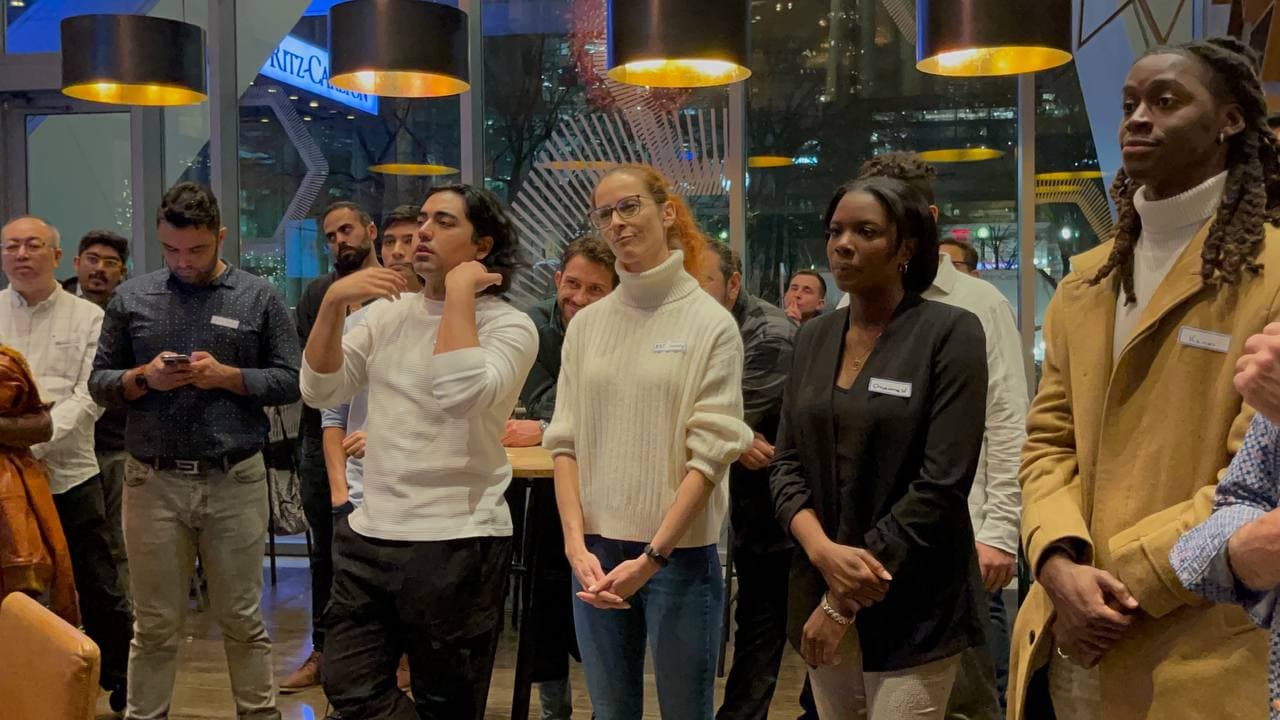
The NYC startup calendar is a firehose. On any given Tuesday you can choose between a fintech panel, two accelerator demo days, a founder dinner, a hackathon kickoff and half a dozen happy-hour mixers, and that's before the conference season. The problem in New York was never finding startup events. It's that your evenings are finite and most events return nothing but a name tag.
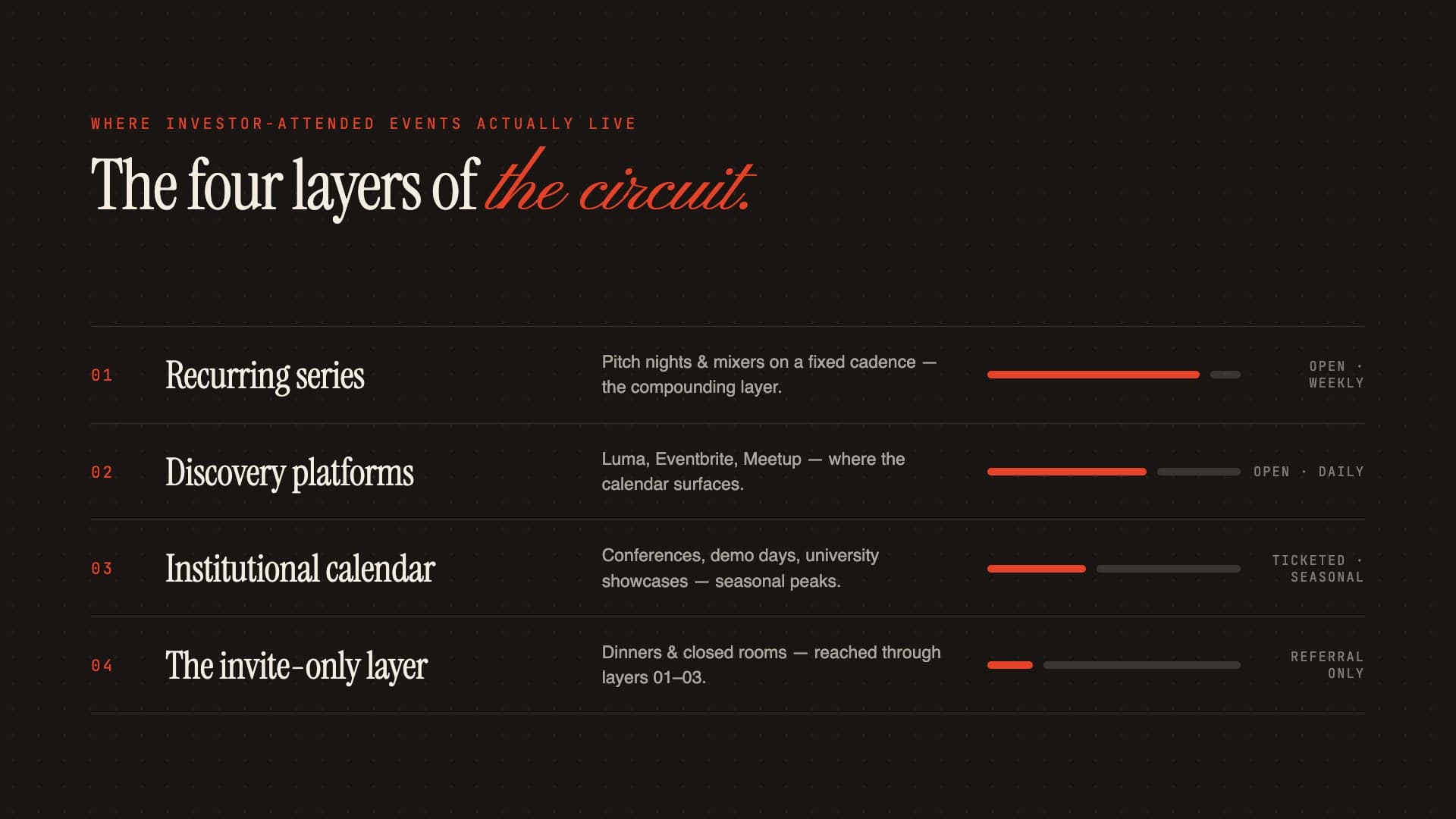
After nearly 900 nights of our own across 25 cities, we've developed strong opinions about what makes an event worth a founder's or investor's time. None of them are about the venue or the turnout number. They're about structure, because structure is what decides whether strangers actually talk.
Here's the filter we'd use if we were navigating the city's calendar from scratch.
Know what each format is actually for
Panels and fireside chats are content, not networking. You sit in rows, facing a stage, next to people you'll never speak to. Go for the speaker if the speaker matters to you; don't go to meet people. The networking happens in the twenty minutes after, and only for those who planned for it.
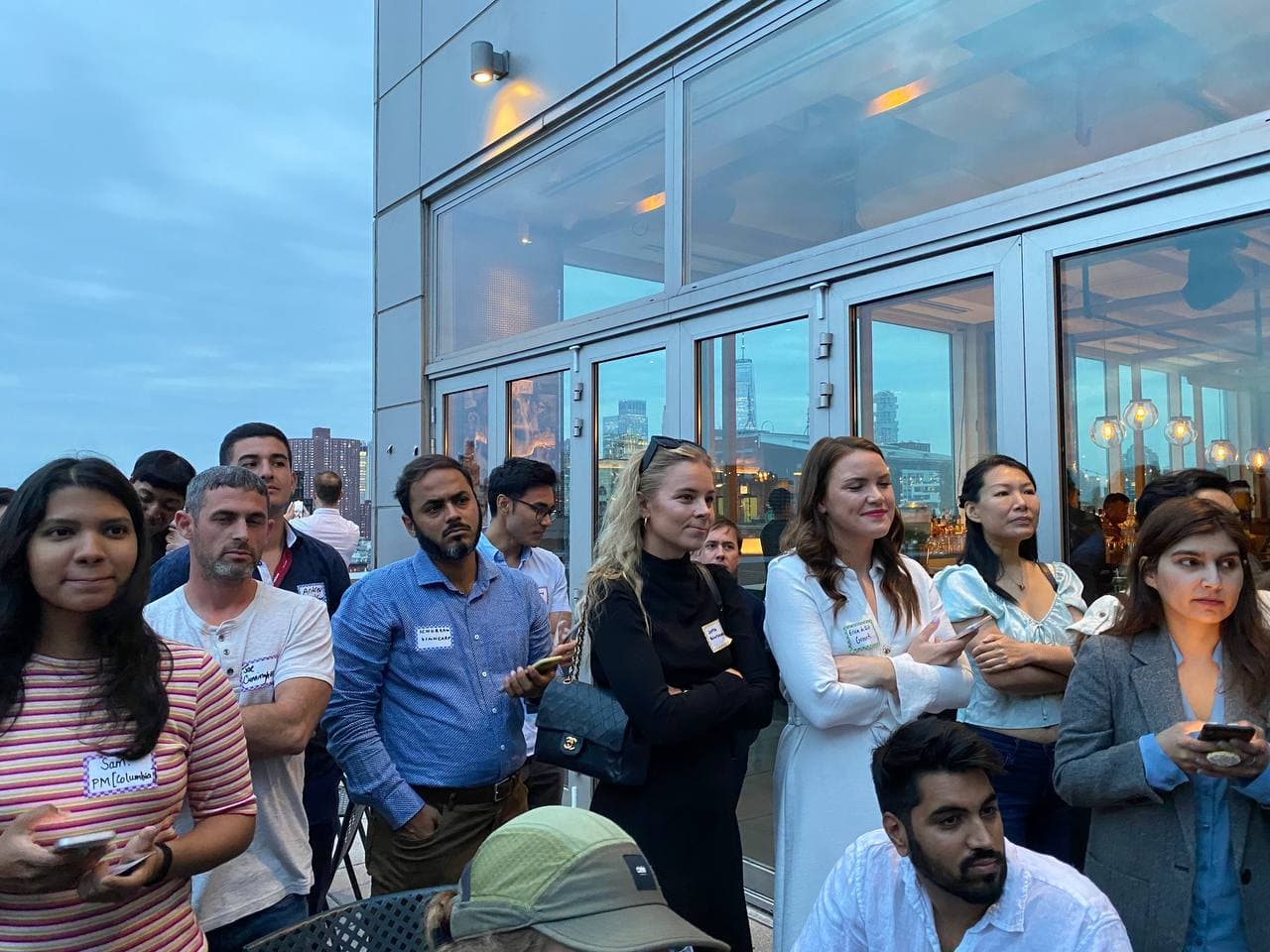
Demo days and hackathons are showcases with a built-in audience, excellent if you're on stage and diluted if you're in the crowd. Happy-hour mixers are the opposite: all mingling, no spine. That works for natural networkers and quietly wastes the evening for everyone else, because with nothing shared to react to, every conversation starts from zero.
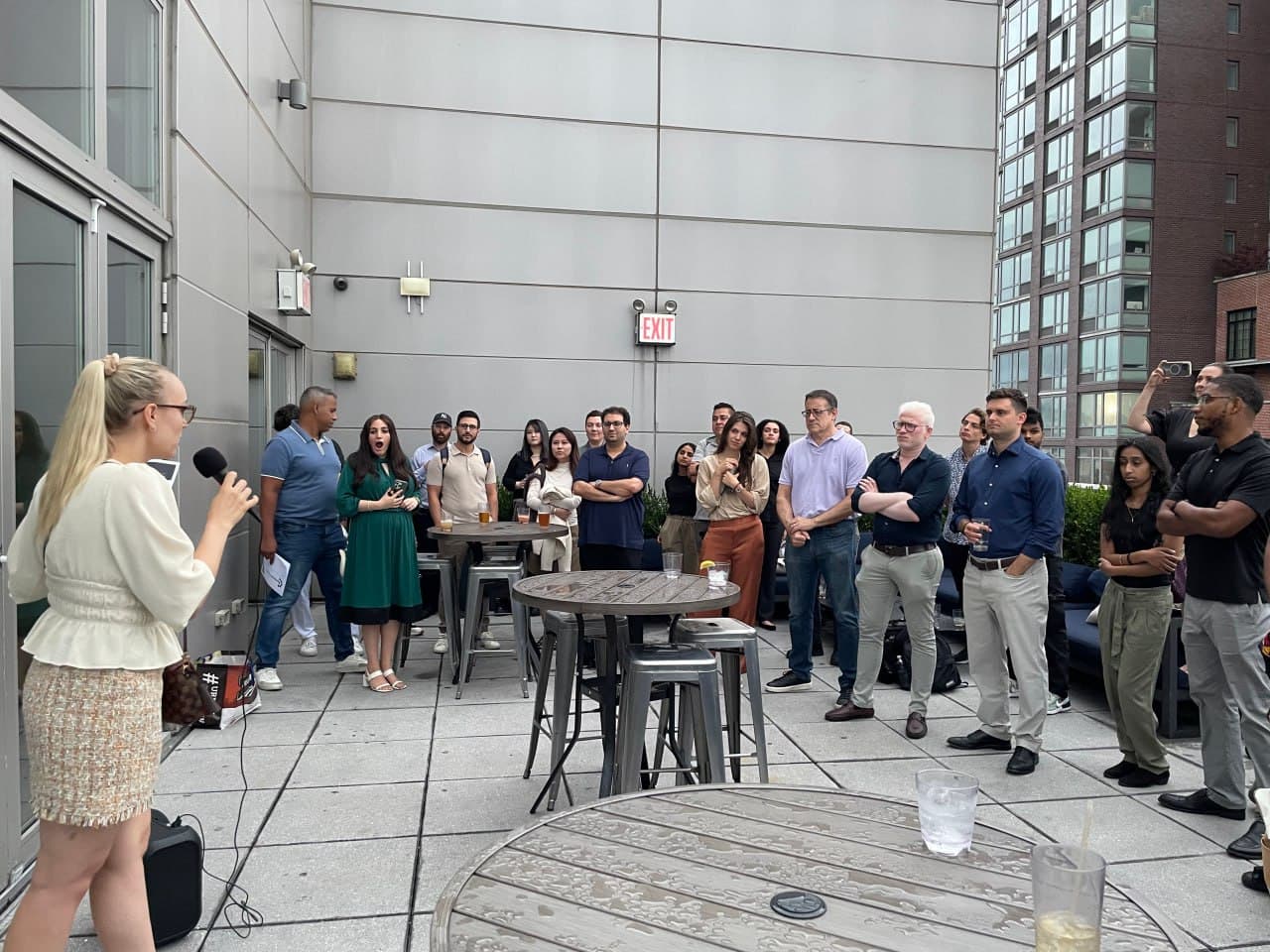
Pitch nights are the format we ended up betting our whole company on, for one structural reason: live pitches give a crowd of strangers something concrete to talk about. You watched the same five founders take the same risk; the conversation starts itself. When people ask why we run pitch nights instead of mixers in all 25 cities, that's the answer. The pitch is a networking device disguised as a fundraising device.
"The problem in New York was never finding startup events. It's that most evenings return nothing but a name tag."
The three-question filter
First: who is confirmed attending, and how were they filtered? An event that can't answer this is selling you attendance, not a guest list. The NYC calendar is full of "investors will be present" claims; the events that deliver are the ones that gate attendance somehow, through approval, curation, or a format investors actually choose for deal flow rather than visibility.
Second: does the format force mixing? Assigned conversations, pitch sessions, small-group dinners. Anything beats open-floor drinks. New York crowds are friendly but busy; unstructured evenings sort themselves into clusters of people who already know each other within fifteen minutes.
Third: does anything persist after the night? A follow-up list, a directory, a community you're now inside. The events that compound are the ones where showing up once leaves a trace. One good recurring event beats five one-offs, because the scene rewards regulars: in a city this large, being recognized is the actual network effect.
Working the calendar like a campaign
Pick two or three recurring events that pass the filter and commit for a quarter. Regularity is what converts events from content into relationships. The third time you're at the same night as someone, you skip the small talk and trade something useful. Event tourism, sampling something different every week, resets that clock every time.
Then work each night like it costs something, because it does: a prepared one-sentence pitch, three people you actually want to meet, and the follow-up note sent within forty-eight hours. Showing up is the easy part. The compounding is in the boring discipline after.
Our own New York nights are built to pass our own filter: founders pitch live, investors join by approval, the format forces the mixing, and every pitching company lands in the public directory with the strongest going out in the biweekly investor drop. If you're going to spend one evening a month at NYC startup events, spend it at an event designed to leave a trace. The next date is on the events page.
Find a pitch night near you and put this into practice.